
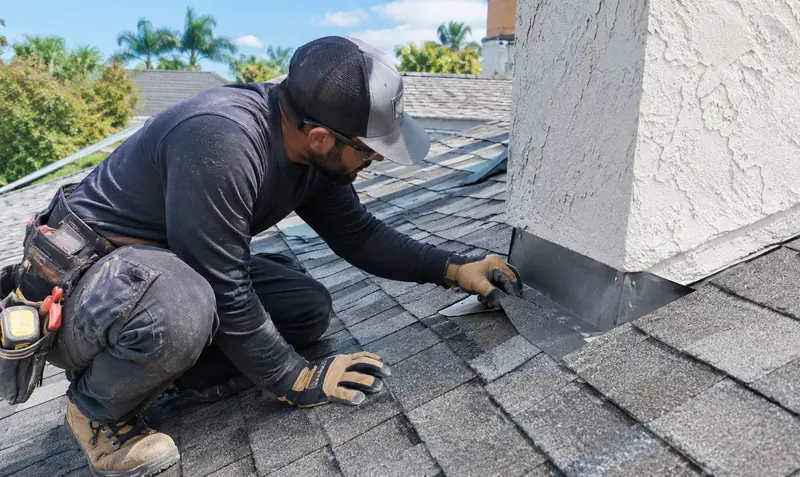
Roof flashing is thin metal installed wherever the roof meets something else: a chimney, a wall, a skylight, a vent pipe or another roof plane. It directs water away from those joints. Because the joints are the weakest points on any roof, failed flashing is the most common cause of roof leaks.
What Are the Main Types of Roof Flashing?
- Step flashing. Small L-shaped pieces woven into the shingles where a roof meets a wall.
- Counter flashing. Covers the top edge of other flashing, usually cut into the chimney or wall.
- Valley flashing. Lines the channel where two roof slopes meet.
- Pipe boots. Collars that seal around plumbing vents.
- Drip edge. Runs along the eaves and rakes to keep water off the fascia.
- Chimney crickets. Small peaked diverters behind wide chimneys.
Why Does Flashing Leak?
- Sealant dries out and cracks after years of sun.
- Metal corrodes, especially older galvanized steel.
- The building moves and gaps open.
- It was reused during a re-roof instead of replaced.
- It was installed incorrectly in the first place.
Can Flashing Be Repaired, or Must It Be Replaced?
Sound metal with failed sealant can be cleaned and resealed, which is a routine part of roof maintenance. Corroded, bent or badly installed flashing should be replaced. During a full roof replacement, new flashing is almost always the right call.
What Is Flashing Made Of?
Most residential flashing is galvanized steel or aluminum. Copper is used on high-end and historic roofs and lasts a very long time. Pipe boots are metal or plastic with a flexible rubber collar.
Whether flashing is being replaced or reused is one of the biggest differences between a cheap bid and a good one.
Key Takeaways
- Flashing seals the joints where roofs meet walls, chimneys and pipes.
- Failed flashing is the most common cause of leaks.
- Sealant can be renewed; damaged metal should be replaced.
- A re-roof should include new flashing.