Commercial Roofing
Commercial Roof Replacement
Replacing a commercial roof is a capital project, and it should be treated like one: a clear scope, a real schedule, and a building that stays open and dry while the work happens.
- 30 years roofing in Los Angeles
- Licensed, bonded & insured
- CA License #668577
- Free written estimates
Before You Replace
First, Make Sure It Really Needs Replacing.
A new roof is the most expensive answer to a roof problem, so it should be the last one we reach for. We start by finding out what is under the surface, because that is what decides it. A roof with dry insulation and a tired surface can often be coated. A roof that is wet underneath cannot.
When replacement is the right call, you will see why in photos, and you will have a written scope and price to plan a budget around.
Repair, Coat or Replace?
How We Decide.
Three honest outcomes of a commercial roof inspection.
Repair or coat when…
- Leaks trace back to seams, flashings, drains or rooftop units
- The insulation under the membrane is still dry
- The membrane is weathered but firmly attached
- The roof has years left and the budget is tight
Replace when…
- The insulation is wet over large areas
- Seams are failing across the roof, not in one place
- The roof already has two layers on it
- Repairs are costing more every year and still not holding
More in our guide to coating vs. replacing a commercial roof.
What to Expect
How a Commercial Roof Replacement Goes
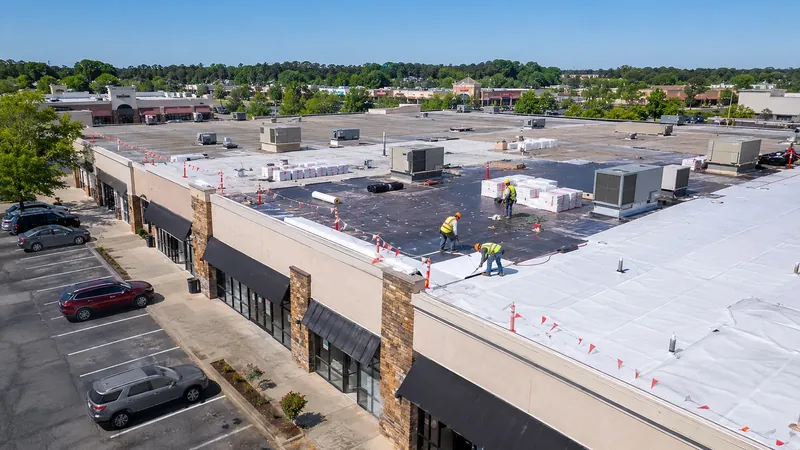
- Inspection and scopeWe inspect and measure the roof, check for trapped moisture, and write up exactly what will be done.
- Scheduling with your buildingDeliveries, crane or hoist time and noisy work are planned around your tenants and hours.
- Tear-off or recover, in sectionsEach section is opened, repaired and closed the same day, so the building is never left exposed overnight.
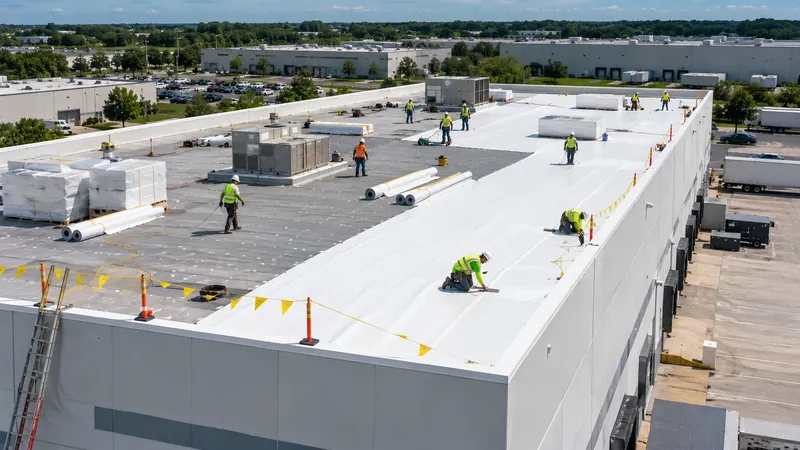
- Insulation and membraneNew insulation or cover board where needed, then the membrane, with every seam and flashing detailed.
- Final inspection and closeoutCity inspections where required, a walkthrough with you, and photos and paperwork for your files.
The New Roof
What Goes Back On
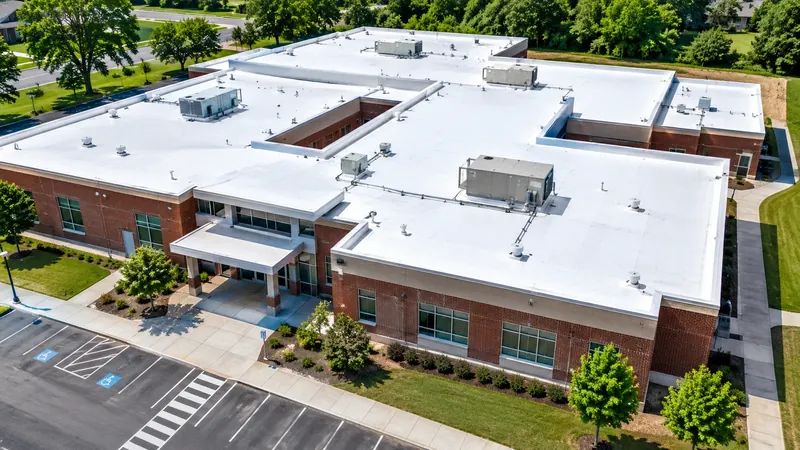
For most flat and low-slope commercial roofs we install a white single-ply membrane. It is light, its seams are heat-welded, and its reflective surface helps with California’s cool-roof requirements. See TPO and PVC roofing for how the two compare.
Worth deciding early
- Whether the old roof is torn off or recovered
- How the roof will drain, and whether tapered insulation is needed
- What happens at each rooftop unit, skylight and drain
- Cool-roof and energy code requirements for your building
Questions
It depends on the size of the roof, how much has to be torn off, and how many rooftop units and penetrations there are. A small building can take a few days and a large one several weeks. Your written estimate includes a realistic schedule.
Sometimes. A recover can save money and disruption when the existing roof is dry and there is only one layer. If the insulation is wet, or there are already two roofs on the building, the old roofing has to come off.
Usually not. We work in sections and keep the building watertight every night. We will tell you in advance about anything tenants need to know, such as noise, odors or access.
Many do. California’s energy code sets cool-roof requirements for most low-slope commercial roofs when they are replaced. Our guide to cool roof rules for commercial buildings covers the basics.
It is priced by the square foot, and the number depends on the size, the tear-off, the insulation, the membrane and the number of penetrations. We measure the roof and give you a written, itemized price at no charge.
More
Commercial
Roofing
Replacement, repair, coatings and maintenance for flat and sloped commercial roofs, from the same crew and to the same standards.
Planning a Roof Replacement? Start With a Real Scope.
We will inspect the roof, check it for moisture, and give you a written scope and price you can budget around.
Get a Free EstimateOr call or text747-230-4726