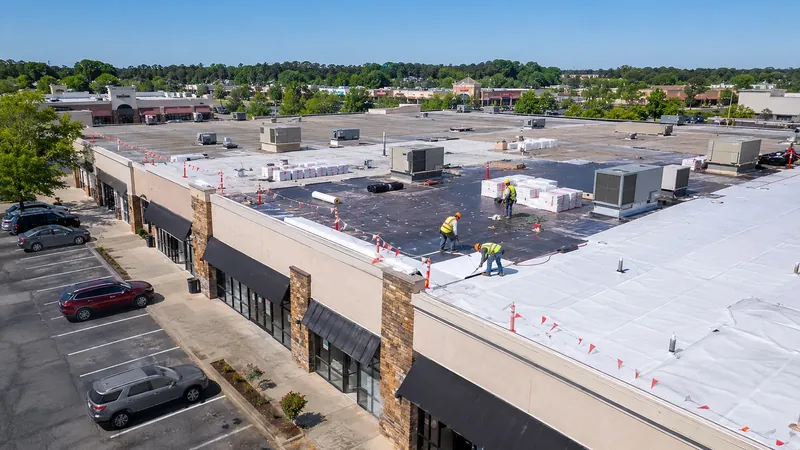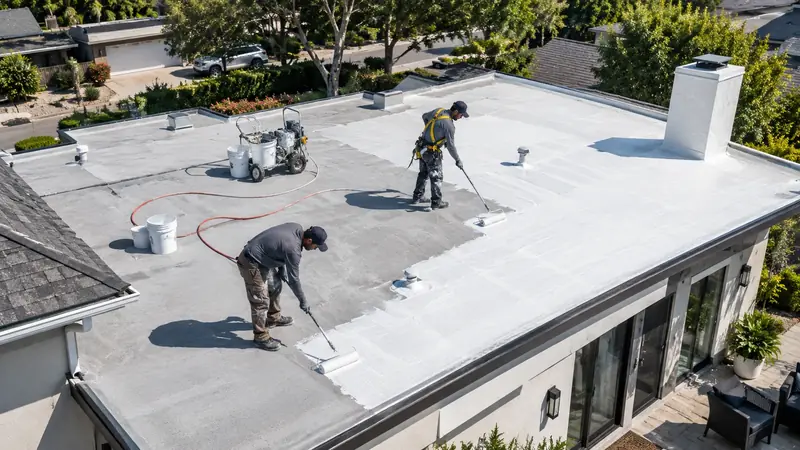
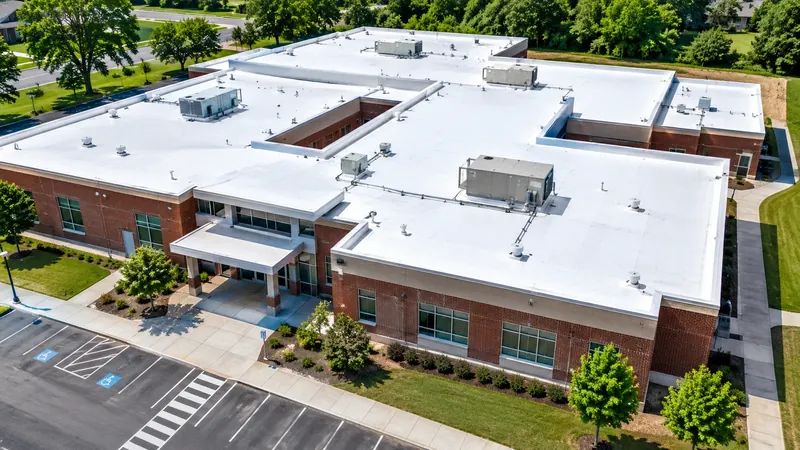
TPO and PVC are both white, heat-welded, single-ply membranes for flat roofs. TPO usually costs less and suits most offices, stores, warehouses and apartment buildings. PVC resists grease, oils and chemicals better, which makes it the usual choice over restaurants and buildings with kitchen or process exhaust.
What Are TPO and PVC?
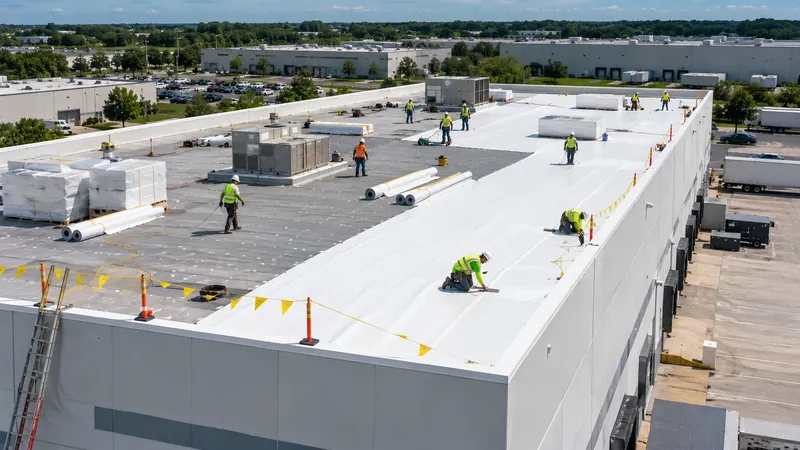
Both are sheets of flexible plastic membrane, rolled out over insulation and joined at the seams. TPO stands for thermoplastic polyolefin and PVC for polyvinyl chloride. On a finished roof they look almost identical: a clean, white, slightly textured surface.
How Do TPO and PVC Compare?
| TPO | PVC | |
|---|---|---|
| Up-front cost | Usually lower | Usually higher |
| Seams | Heat-welded | Heat-welded |
| Grease, oil and chemical resistance | Limited | Good |
| Reflective cool roof | Yes | Yes |
| Common uses | Offices, retail, warehouses, apartments | Restaurants, food service, some industrial buildings |
A general comparison. Products vary by manufacturer and thickness.
Why Do Welded Seams Matter?
On older flat roofs the seams were glued or torched, and seams are where flat roofs leak first. TPO and PVC seams are fused with hot air, so two sheets become one piece. A properly welded seam is as strong as the membrane itself.
When Is PVC Worth the Extra Cost?
When something on the roof will attack the membrane. Kitchen exhaust fans drop grease onto the roof around them, and grease breaks down TPO over time. PVC holds up to it. The same goes for some chemical exhausts. On a building with none of that, TPO is usually the sensible choice.
How Long Do TPO and PVC Roofs Last?
Commonly 15 to 25 years, and sometimes longer. Thickness matters, and so do drainage, the quality of the welds and whether anyone looks after the roof. See how long a commercial roof lasts.
Which Should I Choose?
- Restaurant or food service below? PVC.
- Office, retail, warehouse or apartments? TPO is usually the better value.
- Not sure what is venting onto the roof? We will look when we inspect it and tell you.
Key Takeaways
- TPO and PVC are both white, heat-welded, single-ply membranes.
- TPO usually costs less and suits most buildings.
- PVC is the better choice where grease, oils or chemicals reach the roof.
- Installation quality and maintenance matter more than the label.