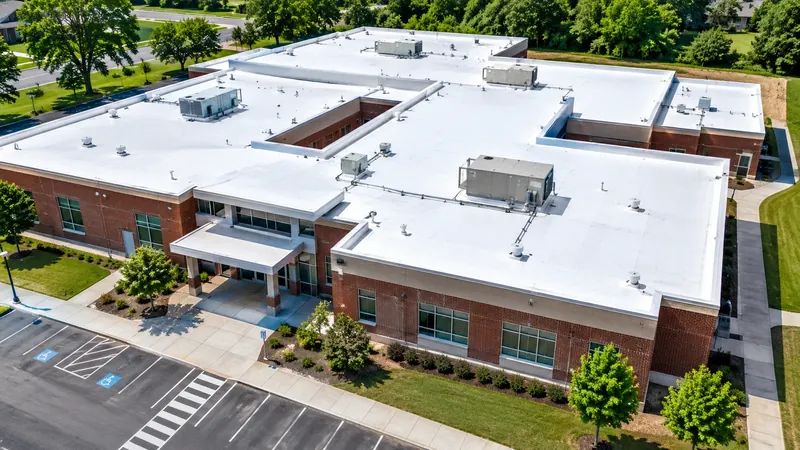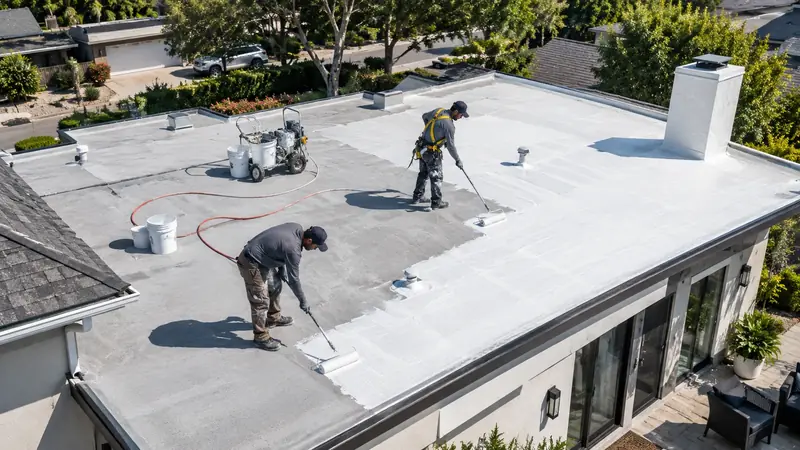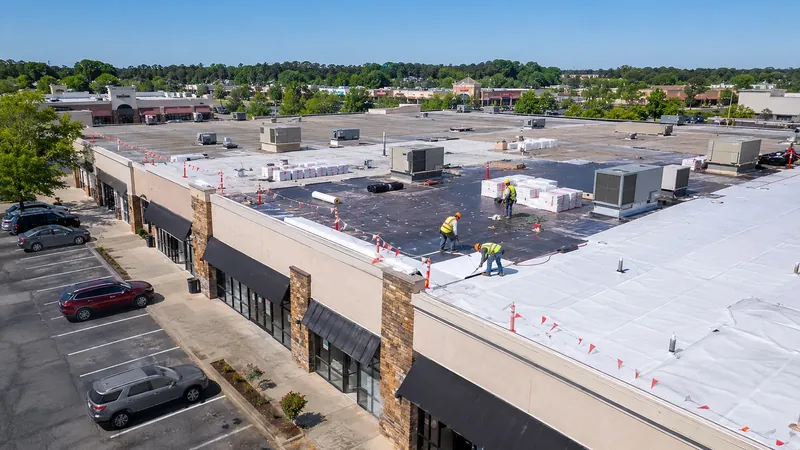
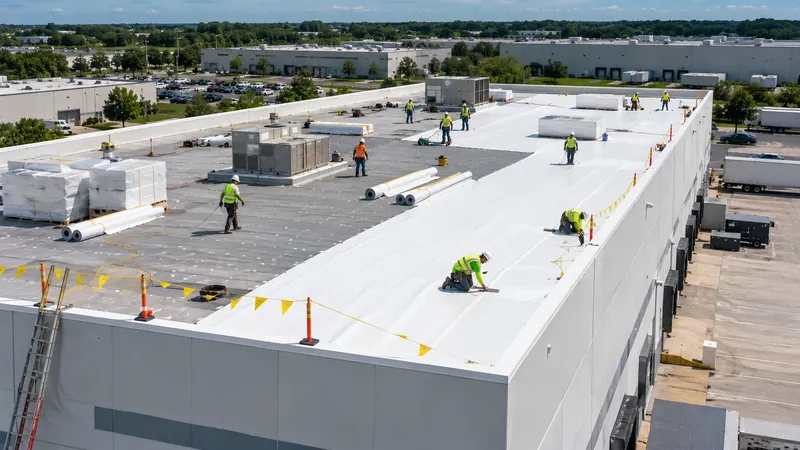
Have a commercial roof inspected twice a year, in spring and fall, and after major storms. Keep the drains clear, look for open seams and damaged flashing, watch the areas around rooftop equipment, and keep a dated photo record. Small repairs made early are what keep a roof out of the replacement budget.
What Can Building Staff Check Themselves?
Only if the roof is safe to walk on and has proper access. Stay well back from the edges, stay off skylights, and do not go up in wet or windy weather.
- Debris on the roof, especially around drains
- Standing water more than two days after rain
- Anything loose: panels, covers, flashing, equipment doors
- New stains on ceilings or walls inside, and where they are
- Damage after other trades have been on the roof
Twice-a-Year Checklist
- Drains, scuppers and gutters. Clear them and make sure strainers are in place.
- Seams. Look for open laps, wrinkles and lifted edges.
- Flashings. Check parapet walls, edges, curbs, skylights and every pipe and vent.
- Sealants. Look for cracked or missing sealant at terminations and pitch pockets.
- Membrane. Look for punctures, blisters, cracks and worn areas.
- Rooftop equipment. Check around air conditioners for damage, loose parts and leaking condensate lines.
- Ponding. Note any areas that hold water.
- Interior. Walk the top floor and look for stains.
What Should Be Checked After a Storm?
- Blocked drains and debris
- Loose or missing edge flashing
- Punctures from blown debris
- Displaced equipment covers and panels
- New leaks inside
Technicians servicing air conditioners, signs and antennas walk the same paths every visit and drop screws, panels and tools. Walkway pads on those paths, and a look at the roof after each service visit, prevent a lot of leaks.
Why Keep a Roof Record?
Dated photos and notes show how the roof is aging and what has been done to it. That record is useful when you budget for a replacement, sell the building or make an insurance claim. Roofing manufacturers also commonly expect a roof to be maintained as a condition of their warranties, so check the terms of yours.
What Should Be Left to a Roofer?
Anything that involves the membrane itself. The wrong sealant or patch can damage a roof or make a proper repair harder later. A maintenance visit covers the inspection, the drain cleaning and the small repairs in one trip.
Key Takeaways
- Inspect in spring and fall, and after major storms.
- Clear drains are the single most important item.
- Watch the paths to rooftop equipment.
- Keep dated photos and repair records.