Commercial Roof Systems
TPO & PVC Membrane Roofing
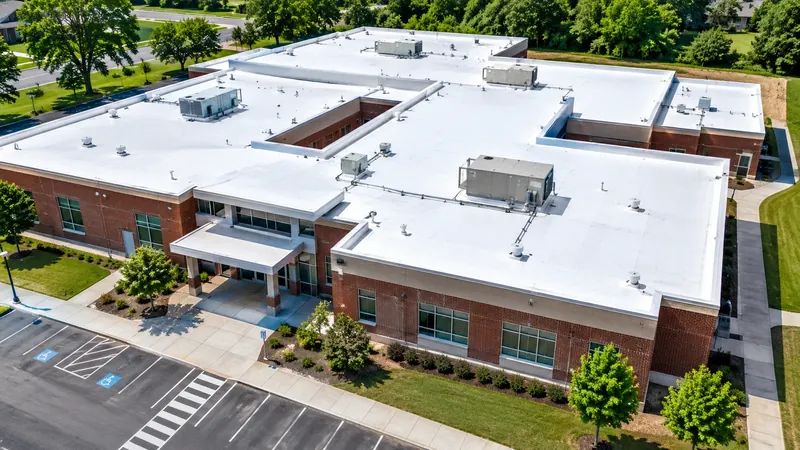
White single-ply membranes are the standard roof for flat commercial buildings in Southern California. They are light, their seams are welded rather than glued, and they reflect the sun instead of absorbing it.
- 30 years roofing in Los Angeles
- Licensed, bonded & insured
- CA License #668577
- Free written estimates
Typical ranges. A roof’s real lifespan depends on the membrane, how it is installed and how it is maintained.
Side by Side
TPO vs. PVC
Both are white, heat-welded, single-ply roofs. The differences matter on some buildings and not on others.
| TPO | PVC | |
|---|---|---|
| Cost | Usually the lower-cost option | Usually costs more |
| Seams | Heat-welded | Heat-welded |
| Grease and chemicals | Can be damaged by grease and oils | Resists grease, oils and many chemicals |
| Best suited to | Offices, retail, warehouses, apartments | Restaurants and buildings with kitchen or process exhaust |
| Reflective cool roof | Yes | Yes |
A general comparison. We recommend a membrane after seeing the building and what is on the roof.
What to Expect
How a Membrane Roof Goes On
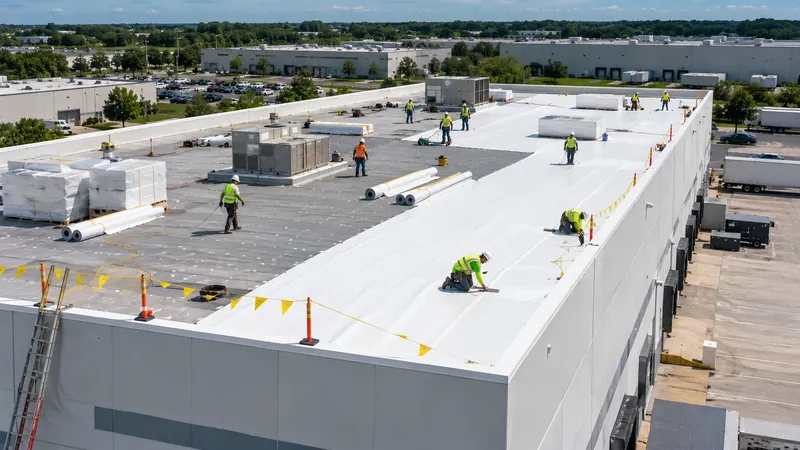
- Prepare the deckThe old roof is removed, or prepared for a recover, and the deck is checked and repaired.
- Insulation and cover boardInsulation is laid, with tapered sections where the roof needs help draining.
- MembraneSheets are rolled out and either fastened or adhered to the roof.
- Welded seamsEvery seam is welded with hot air and checked by hand.
- Flashings and detailsWalls, curbs, drains and every penetration are flashed with the same membrane.
Honest Take
Is a Single-Ply Roof Right for Your Building?
A good fit when…
- The roof is flat or low-slope
- You want a reflective roof that helps with cooling
- The building has a lot of rooftop equipment to flash around
- You want welded seams rather than glued ones
Look at other options when…
- The roof is steep enough for shingles
- The existing roof is sound and only needs a coating
- The roof gets heavy foot traffic and needs added protection
Not sure which you have now? We will tell you when we inspect the roof.
Questions
They look alike and install alike. PVC stands up better to grease, oils and chemicals, which makes it the usual choice over restaurants. TPO usually costs less and suits most other buildings. Our TPO vs. PVC guide goes into detail.
Commonly 15 to 25 years, and sometimes longer. Membrane thickness, the quality of the installation, drainage and regular maintenance all move that number.
Often, if the existing roof is dry and there is only one layer. We check for trapped moisture first, because a wet roof has to come off.
For many commercial buildings, yes. The state energy code sets reflectivity requirements for most low-slope commercial roofs when they are replaced. See cool roof rules for commercial buildings.
More
Commercial
Roofing
Replacement, repair, coatings and maintenance for flat and sloped commercial roofs, from the same crew and to the same standards.
Not Sure Which Membrane Your Building Needs?
We will look at the roof and what is on it, and price the options side by side.
Get a Free EstimateOr call or text747-230-4726